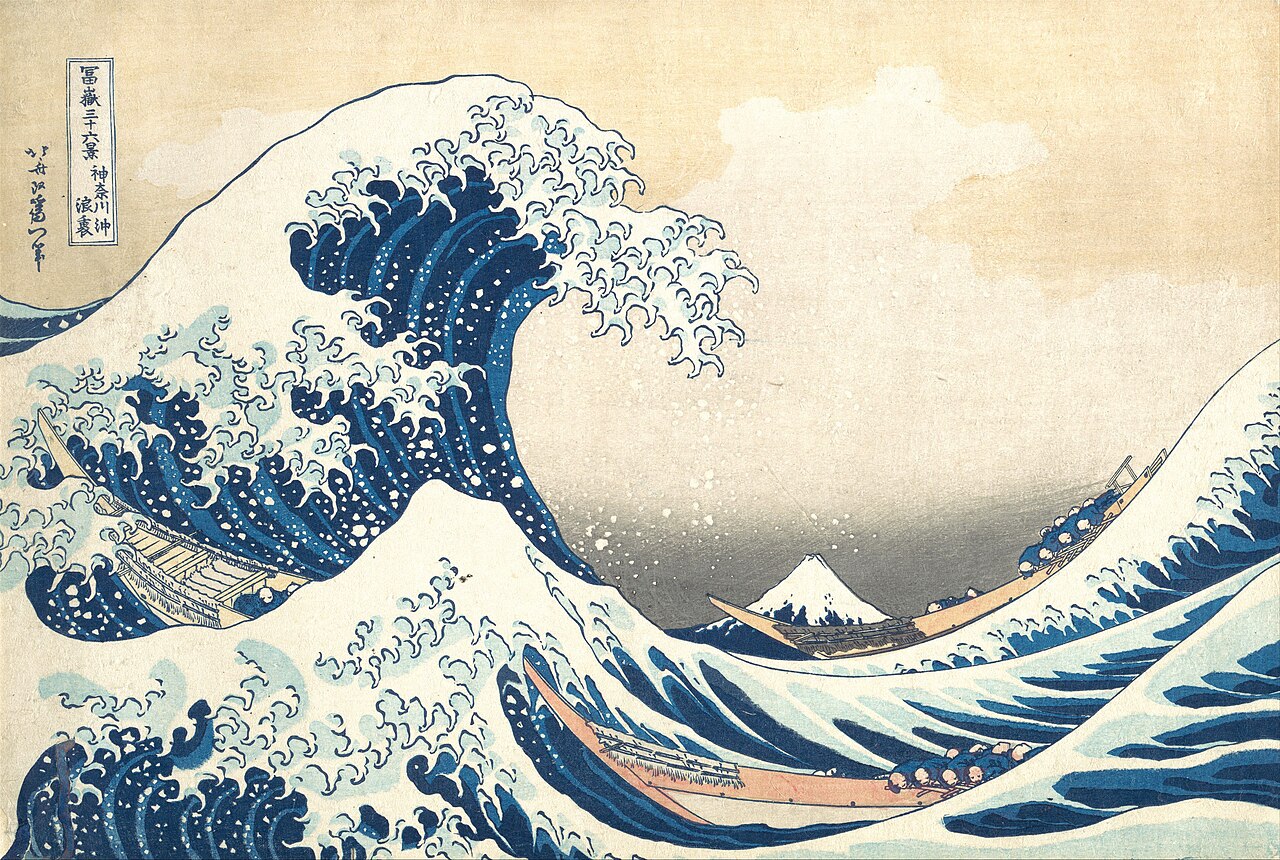
The Great Wave off Kanagawa by Katsushika Hokusai

All Is Well in the Great Mess

"That which I have said is only like the few leaves in my hand. And that which I have not said is like the dry leaves in this forest."

50,957 words

Present Authoring: Faults - 10 - Select Habits

Openness/Traditionalism

Select Relevant Items

Please select habits that apply to you. You can select up to 10 habits, and are required to select at least 2. Be over-inclusive. Don’t worry if some of the bad habit descriptions do not really apply, as you will get to specify the most typical habits later, when you make your final fault selection, prior to writing.

  • Pursue too many activities at the same time
  • Am interested in so many things that I don’t know what to focus on
  • Have a hard time planning for the future because I am interested in everything
  • Am sometimes attracted by ideas that are radical but have not been thought through
  • Sometimes see meaning in things that probably isn’t there
  • Jump around too much from topic to topic when I am talking to people
  • Have a hard time making up my mind because I can always see all the sides of an argument
  • Am so interested in creative activities that it is hard to concentrate on things that are practical
  • Can become possessed by an idea
  • Daydream too much
  • Sometimes every thought I have immediately suggests an overwhelming number of ideas
  • Have had experiences or thoughts that were strange enough to frighten me
  • Have had a hard time forming a clear identity
  • See connections between things too easily
  • Have done crazy things just because I was curious about what might happen
  • Am good at a too-narrow range of things
  • Am seldom interested in abstract, philosophical ideas
  • Avoid sophisticated fiction and stories
  • Do not attend movies or plays
  • Am unimaginative
  • Do not care for change
  • Do not involve myself in creative activities
  • Do not like to read challenging material
  • Do not really understand or value art
  • Seldom seek out new experiences
  • Try to avoid complex people
  • Will not probe deeply into a subject
  • Am unlikely to initiate a new project
  • Tend to think that creative people are strange
  • Always do things the same way once I have learned how to do them
Permalink

Present Authoring: Faults - 09 - Select Habits

Extraversion/Introversion

Select Relevant Items

Please select habits that apply to you. You can select up to 10 habits, and are required to select at least 2. Be over-inclusive. Don’t worry if some of the bad habit descriptions do not really apply, as you will get to specify the most typical habits later, when you make your final fault selection, prior to writing.

  • Sometimes act without thinking
  • Sometimes talk too loudly
  • Can spend too much money
  • May exaggerate the truth
  • May dominate the conversation excessively
  • Find it difficult to spend time alone
  • Could be a better listener
  • May spend too much time pursuing fun and excitement
  • May attract too much attention to myself
  • Do not let the quieter people have a chance to talk
  • Try too hard to be the center of attention
  • Can be too theatrical or dramatic
  • May be too dependent on the admiration or attention of others
  • Can be a little grandiose
  • Talk about myself a lot
  • Often feel uncomfortable around others
  • Keep in the background
  • Have too little to say
  • Lose opportunities because I am too isolated
  • Am too quiet around strangers
  • Find it difficult to approach others
  • Don’t laugh much or have fun
  • Bottle up my feelings
  • Am a very private person
  • Wait for others to lead the way
  • Feel drained by social interactions
  • Am not very enthusiastic
  • Could be more socially skilled
  • Have a difficult time starting conversations
  • Have a social circle that is too small
Permalink

Present Authoring: Faults - 08 - Introductions 8

Change

Personality is reasonably stable over the lifespan, and is also powerfully influenced by hereditary or genetic factors. Despite this, personality can broaden or even transform. As people age, for example, they tend to become more agreeable, conscientious and emotionally stable.
Changing personality means changing habits of action, presumption and perception. Personality change requires the formulation of clear future goals, as well as discipline and practice. People who are too agreeable can learn to stand up for themselves. Disorderly people can become more conscientious. Introverted people can become socially skilled. People who experience paralyzing levels of negative emotion can learn to explore.

Permalink

Present Authoring: Faults - 07 - Introductions 7

Impact of Personality Traits

There are advantages and disadvantages to each trait, particularly at the extremes. Extremely sociable, extraverted people can be dominant and impulsive, while introverted, quiet people can easily become isolated and depressed. Extremely open people can be scattered and overwhelmed by their own thoughts and ideas, while closed-minded people may become narrow and inflexible. Exceptionally conscientious people can be obsessive about order, judgemental and rigid, while their more carefree counterparts may be messy, undisciplined and careless. People very high in emotional stability may engage in risky, dangerous behavior, while those who are more neurotic can become so preoccupied by anxiety and pain that they are unable to function. Finally, extremely agreeable people may never stand up for themselves, while those who are too assertive can be aggressive, callous and bullying.

Permalink

Present Authoring: Faults - 06 - Introductions 6

Stability

Stability, the second higher-order trait, can be further broken down into three sub-traits: Conscientiousness (the tendency to be orderly and industrious), Emotional Stability (lack of negative emotional volatility and the tendency to withdraw), and Agreeableness (politeness and compassion, as opposed to belligerence or aggression).

Conscientiousness (Conscientious vs Carefree)

  • Competent
  • Orderly
  • Decisive
  • Achievement-oriented
  • Self-disciplined
  • Deliberate
  • Industrious

Emotional Stability (Calm vs Nervous)

  • Anxious (reversed)
  • Angry (reversed)
  • Hostile (reversed)
  • Depressed (reversed)
  • Self-Conscious (reversed)
  • Vulnerable (reversed)

Agreeableness (Agreeable vs Assertive/Aggressive)

  • Warm
  • Trusting
  • Straightforward
  • Altruistic
  • Modest
  • Compliant
  • Tender-minded
  • Nice
Permalink

Present Authoring: Faults - 05 - Introductions 5

Plasticity

Plasticity, the first higher-order trait, can be further broken down into two sub-traits: Extraversion (the tendency to be enthusiastic and dominant) and Openness (the tendency to be open-minded and intelligent).

Extraversion (Outgoing vs Reserved)

  • Sociable
  • Active
  • Adventurousness
  • Positive
  • Excitement-Seeking
  • Gregarious

Openness (Original vs Traditional)

  • Fantasy-prone
  • Aesthetically-minded
  • Philosophical
  • Creative
  • Intuitive
  • Intellectual
Permalink

Present Authoring: Faults - 04 - Introductions 4

Background Knowledge

To complete the following exercise, there are a number of things that are useful to know. (you may have encountered this information previously if you have completed the virtues analysis program, but it might be worthwhile to review it):

Everybody’s personality is composed of two higher-order traits. The first higher-order trait is known as plasticity, and can be thought of as the tendency to be flexible, exploratory, curious, and quick to adapt. The second higher-order trait is known as stability, and can be thought of as the tendency to be structured, organized, emotionally stable and focused.

Permalink

Present Authoring: Faults - 03 - Introductions 3

Completing the Exercise 2

On many pages, you will not be able to successfully click Next or Previous unless you have provided a minimum of necessary text. If you do not, you will receive an error message, and the text box in question will be highlighted in red.

Text boxes also have a maximum length. Pay attention, as you write, to the numbers above the text boxes. Numbers like [180 / 1000] indicate that you have typed 180 characters out of a maximum allowable of 1000. When you go over the maximum, the numbers above the text box become red. Clicking Next, Previous, or Save will result in an error message and you will not be able to proceed to the Next or Previous page. To resolve this, edit your text until the number of characters is less than or equal to the maximum. These limitations have been established so that you do not get stalled at any point in the process.

Read post

Present Authoring: Faults - 02 - Introductions 2

Completing the Exercise 1

During this exercise, you will be presented with a series of pages either providing you with information, or asking you to describe aspects of your personality and experiences.

You may proceed through the exercise by clicking the Next button.

You can go back to previous pages by clicking Previous.

Each time you click Next or Previous, the data you have entered on that page will be saved. You can also save your data while remaining on the same page by clicking Save. In addition, many of the pages where you are asked to write for longer periods of time will automatically save every minute or so.

Read post

Present Authoring: Faults - 01 - Introductions 1

This program has been designed to allow you to do an in-depth analysis of some of the negative aspects or faults of your personality. It is the partner program to the virtues analysis section of the present authoring program. It is our hope that constructing a clearer picture of your faults will help you understand the impact of your personality traits on your life in the past, present, and future.

Read post

Present Authoring: Faults - 01

Welcome to the Present Authoring: Faults component of the Self-Authoring suite. This exercise has been designed to allow you to do an in-depth analysis of some of the negative aspects or faults of your personality.

The exercise may take up to three hours to complete. You may quit the exercise any time by clicking Exit/Home or shutting down your browser. If the current page is a page you have been writing on, remember to click Save before exiting. The text that you entered on previous pages will have already been saved.

Read post

Past Authoring / Autobiography - 14 - Conclusion

At this point you have completed the past authoring or autobiography exercise.

People are much healthier and more hopeful and less depressed and more productive if they have truly derived the most relevant information from their past experiences. You can tell if this has happened (1) if there are no longer past memories that haunt and bother you, or that make you feel resentful (2) if your story has been written in a manner that would allow you to tell it to another person so that they could understand it.

Read post

Past Authoring / Autobiography - 13 - Analysis

  1. How did this experience come about? Was it primarily positive or negative? Were you helped or hurt by other people? What role did you play during this time period to shape the events that led to this experience? Were there things that you should have done differently? Were there important occurrences that were out of your control, or beyond your understanding at that time? Write approximately 1,000 characters.

  2. What effect did this experience have on your trust in people? On your hopes for the future? On your belief in your own value and the value of life? On your personality? Write approximately 1,000 characters.

Read post

Past Authoring / Autobiography - 12 - Ten Most Critical Life Experiences

You wrote about a number of experiences in the previous pages. They are all listed below. Choose the ten experiences that were most important in shaping your life. Each of these will be subjected to further analysis, to help you understand their significance.

Note: If you are revisiting this screen, deselecting an experience will remove the later analysis associated with it.

Permalink

Past Authoring / Autobiography - 10 - Significant Experiences from this epoch

Please describe in detail up to six significant experiences that happened to you during this period of your life. You can describe positive and negative experiences. We recommend describing at least four significant experiences from each time period.

For each experience, provide a title (which will be used to refer to this experience later on) and a description of the experience. Later you will explore the impact this experience has had on your life. Here, limit your description to the event itself (approximately 1,000 characters).

Read post

Past Authoring / Autobiography - 09 - Division of Your Life into Epochs

Please divide your experiences into seven time periods that represent your life so far:

Epoch 1

Epoch Title (100 chars):

Epoch 2

Epoch Title (100 chars):

Epoch 3

Epoch Title (100 chars):

Epoch 4

Epoch Title (100 chars):

Epoch 5

Epoch Title (100 chars):

Epoch 6

Epoch Title (100 chars):

Epoch 7

Epoch Title (100 chars):

Permalink

Past Authoring / Autobiography - 08 - Instructions 7

General Description

First, you will be asked to divide your life into seven different time periods or “epochs.” These epochs can be as short or as long as you want, depending on how much you want to write about. One epoch might be “Grade School”, for example, while a later epoch could be “First Year University”.

If you have many significant experiences from a particular period of time, that period deserves to have its own epoch.

Read post

Past Authoring / Autobiography - 07 - Instructions 6

Attitude While Writing

If you are rushed, or distracted, or bored, then you are not doing the writing in a manner that will benefit you. If you are writing about important events, you may find the exercise difficult and emotionally challenging, but it should not be boring. If you are rushed or distracted, then you are trying too hard to finish, or have not put enough time aside to do the writing.

Read post